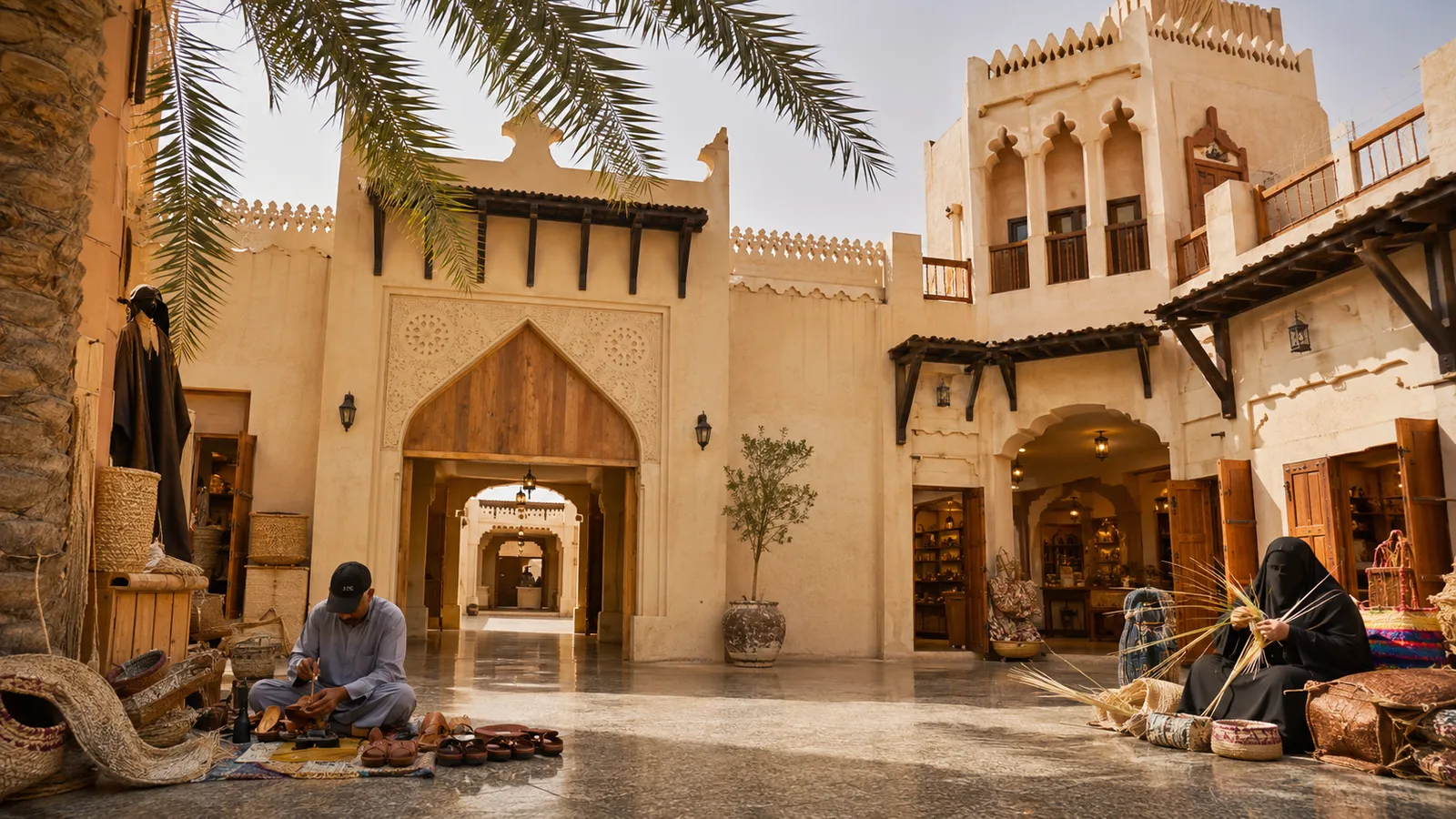
In Al-Ahsa, craft is not an exhibit behind glass — it is a set of living trades handed down through families generation after generation, so much so that the city’s name is bound to its accession to the UNESCO Creative Cities Network. This is a tour of the oasis’s foremost crafts, and where to watch them being made.
The Hasawi Bisht: The Cloak of Occasions
The Hasawi bisht is the cloak of ceremony and standing, and what sets it apart is the Hasawi weave: precise hand embroidery in zari threads coated with gold or silver water. Al-Ahsa families have passed the trade down generation after generation, and Qaisariyah Souq — trading for more than two centuries — is the classic place to see the cloaks and buy them from the people who make them.
Pottery: Dougha Al-Gharash
At the foot of Jabal Al-Qarah in Al-Qarah village sits Dougha Al-Gharash, a pottery house where vessels are still shaped from clay in the old manual way and fired in its kilns. The Al-Gharash family has handed the craft down through the generations — press coverage records that pottery has endured on this spot for more than six hundred years — and its craftsmen have shown their work at international exhibitions in France, the United States and Canada. Today the Dougha is a visitor stop where you watch the full sequence — kneading the clay, the wheel, the kiln — and buy from its wares.
Palm-Frond Weaving
From the palm’s fronds and leaves, the people of Al-Ahsa wove their households’ needs across the centuries, and frond-work is still present among the local crafts in the shops of Qaisariyah and the Craftsmen Souq — proof that in the oasis, the palm gives all of itself, from fruit to frond.
Where It All Comes Together: The Craftsmen Souq
In the heart of historic Hofuf, the Craftsmen Souq opened in March 2020 to support handicrafts and folk arts: spread over more than 12,000 square metres, it houses 112 artisans’ shops, an open courtyard, a traditional coffee house and a tannour bakery. It also holds a handicrafts academy run by experienced craftspeople who pass their trades to new generations — the heart of Al-Ahsa’s bond with the Creative Cities Network.
Make It a Day
The three stops fit together naturally: the Dougha by Jabal Al-Qarah in daylight, then the Craftsmen Souq and Qaisariyah in central Hofuf in the evening, when the shops open their doors. Add them to My saved places for a ready route, or fold them into the two-day itinerary. And what deserves a place in your suitcase from this tour is covered in the souvenirs guide.
