Historic Hofuf Trail
Urban heritage at the heart of the old city
This trail threads through old Hofuf, between Al-Kut quarter and Souq Al-Qaisariya: a fortress that housed the Ottoman garrison, the house where the people of Al-Ahsa pledged allegiance to King Abdulaziz, Al-Ahsa's first government school, and a covered market that is still very much alive. The stops sit close together and are best explored on foot in the morning: Qasr Ibrahim closes in the afternoon, and Souq Al-Qaisariya closes at midday and reopens in the evening. On Fridays, though, Qasr Ibrahim is closed and Souq Al-Qaisariya opens in the evening only, so save it for the evening. Bayt Al-Bay'ah and Al-Amiriya School are temporarily closed at present.
Steps through the memory of Hofuf
Your progress is saved in this browser only.
Trail stops
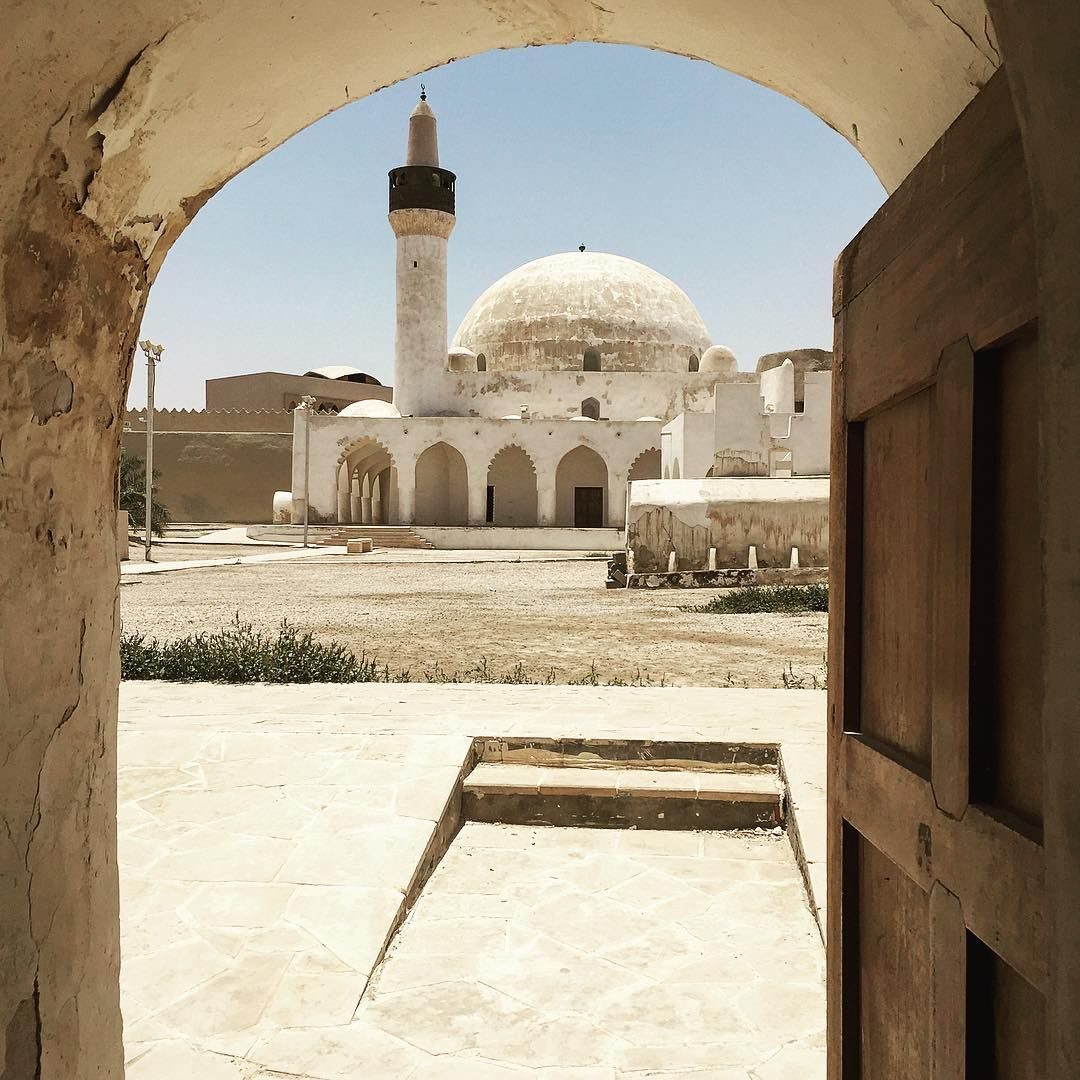
Qasr IbrahimUNESCO
A fortress on the northern edge of Al-Kut quarter, dating to the 10th century AH (16th century CE) and later used as the Ottoman garrison headquarters in Al-Ahsa. It blends two styles: the religious, seen in the arches and domes of the Al-Qubba Mosque, and the military, expressed in massive towers, soldiers' barracks and horse stables, all built from mud, straw and palm trunks. King Abdulaziz restored Al-Ahsa to the Saudi state in 1331 AH / 1913 CE. The fortress is one of the inscribed UNESCO component parts.
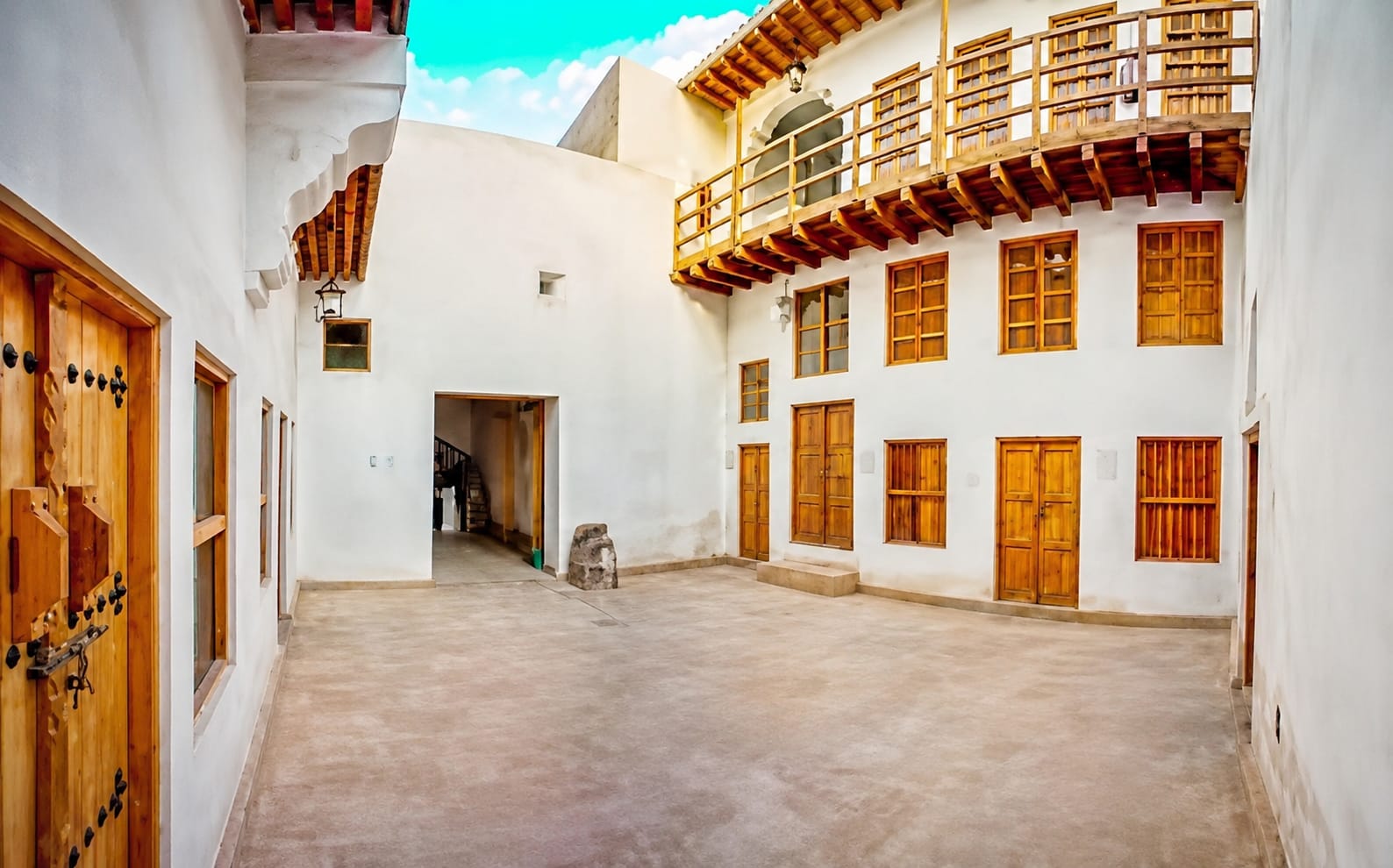
Bayt Al-Bay'ah (Al-Mulla House)
The Al-Mulla family house in Al-Kut quarter, built in 1203 AH / 1788 CE according to the King Abdulaziz Foundation (Darah), is a fine example of traditional Al-Ahsa architecture. King Abdulaziz stayed here on entering Al-Ahsa in 1331 AH / 1913 CE, and it was here that the people of Al-Ahsa pledged their allegiance to him, hence its name, the House of Allegiance. Restored and open to visitors, it bears witness to a defining moment in the unification of the Kingdom.
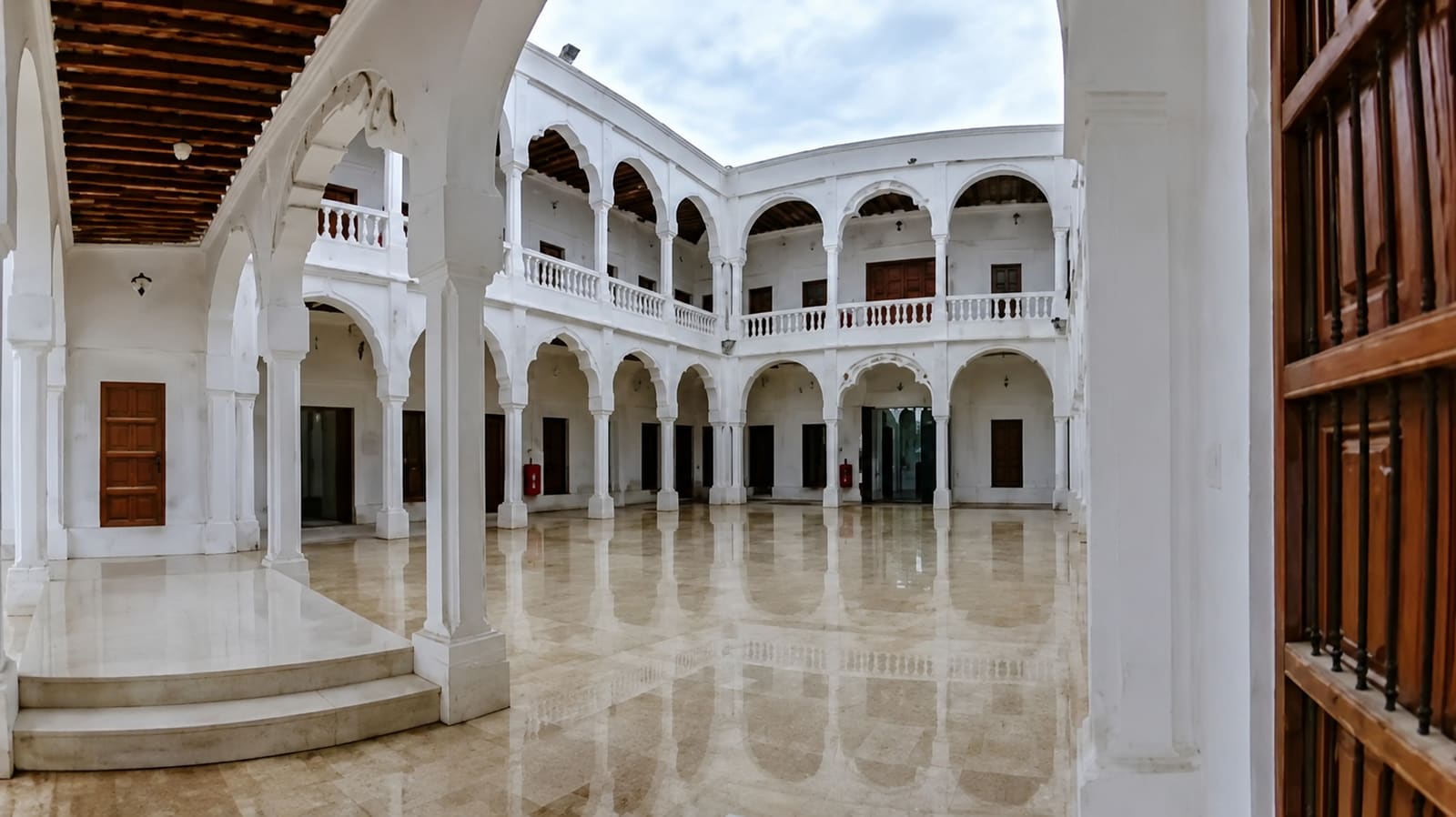
Al-Amiriya School (House of Culture)
Al-Ahsa's first government primary school: classes began in 1356 AH / 1937 CE, and the present building opened officially in Muharram 1360 AH, covering some 1,200 m² around a square courtyard framed by round-arched arcades. Its first class graduated in 1943, and several prominent statesmen studied here. Now known as the House of Culture, it hosts the Heritage Commission's Craftsmen's House programme, launched in 2022.
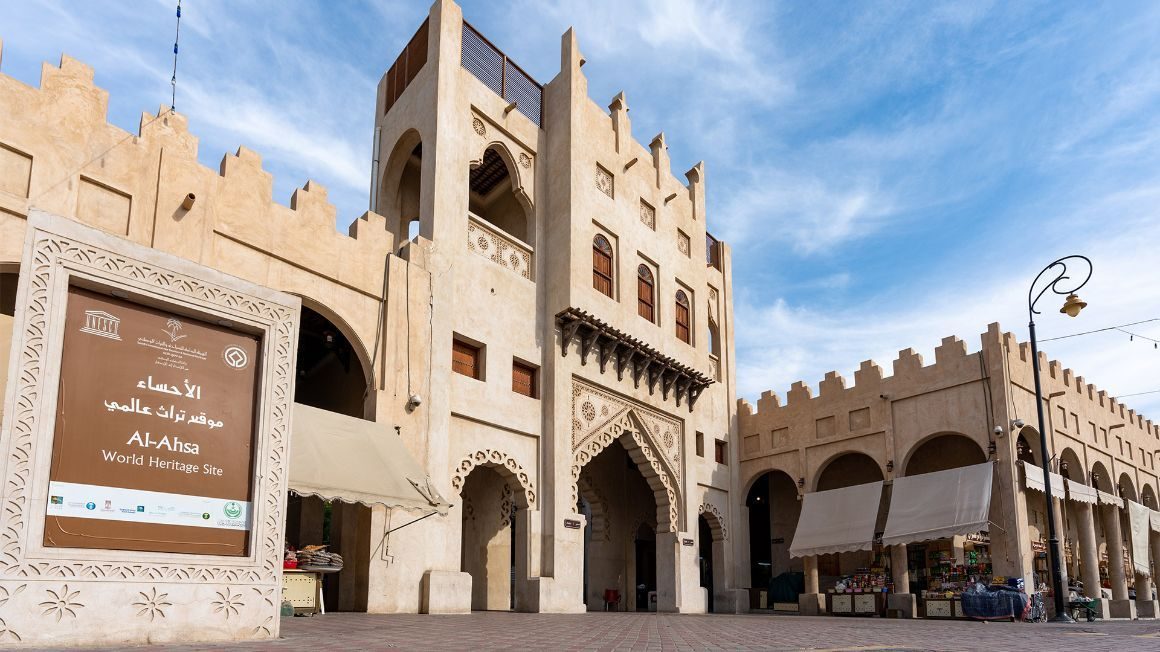
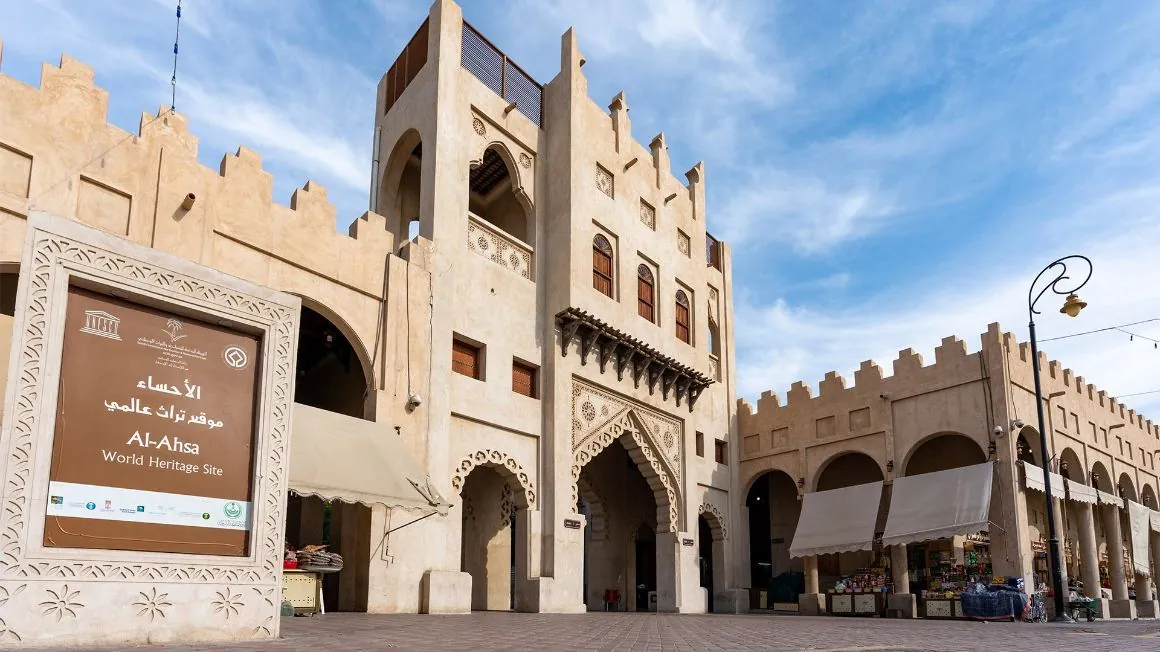
Souq Al-QaisariyaUNESCO
A historic covered market in central Hofuf, built in 1238 AH / 1822 CE. It spreads over more than 15,000 m² with fourteen gates and some 422 shops selling fabrics, traditional clothing, incense and local products. Damaged by fire in 2001, it was rebuilt and fully reopened in late 2013. It is one of the inscribed UNESCO component parts and the natural finale of the trail.


The UNESCO badge is shown only for stops within the twelve component parts of 'Al-Ahsa Oasis, an Evolving Cultural Landscape', inscribed in 2018.
Trail map
The map shows only stops linked to a landmark page.
Suggested trails for exploring Al-Ahsa.
All trailsThe oasis awaits
From the sands of Al-Asfar to the shade of the palms, your journey starts here.
Plan your visit